What are the advantages of laparoscopic surgery?
If you've ever spoken to someone who had surgery twenty years ago and someone who had laparoscopic surgery recently, you'll notice something interesting. The stories sound completely different.
One remembers weeks of pain.
The other remembers walking the next day.
That's not magic. It's the way modern surgery has evolved.
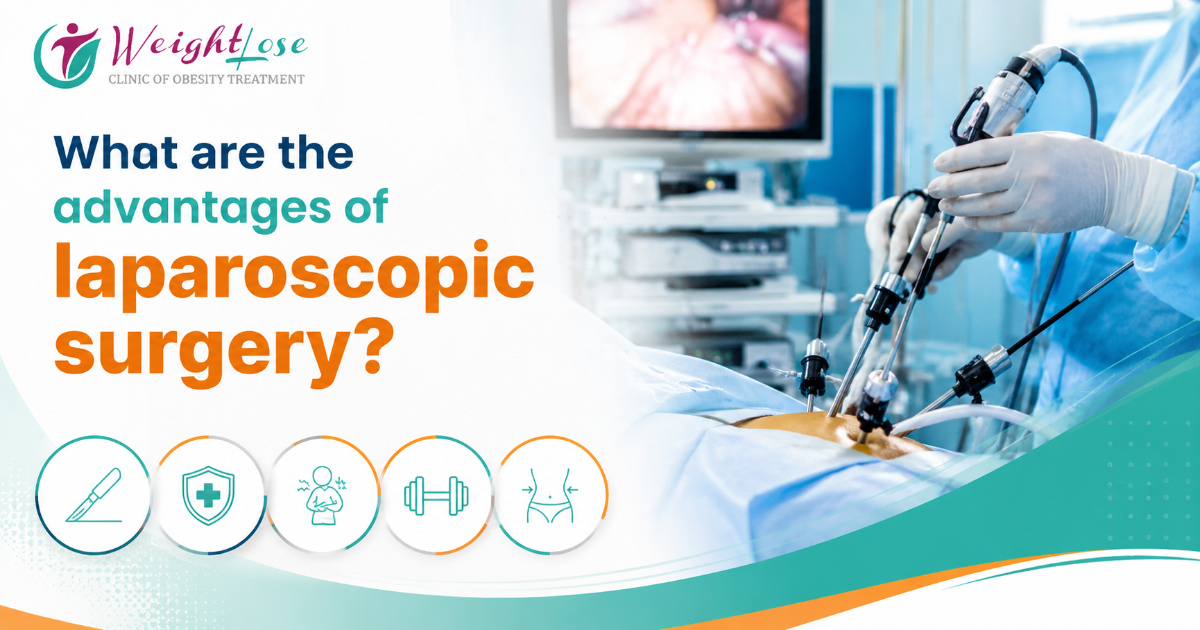
Laparoscopic surgery—often called minimally invasive or keyhole surgery—uses tiny incisions instead of one large surgical cut. Through these small openings, surgeons insert a camera and specialised instruments to perform the operation while viewing a magnified image on a screen. It sounds simple enough, but the difference it makes to a patient's recovery can be remarkable.
The biggest advantage? Less trauma to the body.
Think about cutting through a large section of fabric versus making a tiny slit with precision scissors. Both may get you where you need to go, but one leaves far less damage behind. Human tissue responds in much the same way. Smaller incisions usually mean less pain, less bleeding, and a much smoother recovery.
That's important.
Many patients are surprised by how quickly they can return to their daily routine after laparoscopic surgery. Depending on the procedure and the individual's health, some people are walking within hours and resuming light activities in just a few days. Compare that with traditional open surgery, where recovery often stretches into several weeks, and it's easy to see why minimally invasive techniques have become the preferred option whenever they're suitable.
Pain management is another major advantage.
Nobody enjoys relying on strong pain medications after an operation. Smaller wounds generally lead to less discomfort, which often means reduced dependence on painkillers during recovery. It doesn't eliminate pain altogether—not a chance—but it usually makes the healing journey much more manageable.
Then there's the cosmetic aspect. It may seem like a small concern before surgery, yet many patients appreciate having a few tiny scars instead of one long incision. Imagine looking in the mirror six months later and barely noticing where the surgery happened. That matters more than people often admit.
Another benefit people don't always think about is the lower risk of infection.
Every surgical incision creates an opening through which bacteria can potentially enter. Smaller incisions naturally reduce that exposure. Hospitals still follow strict infection-control protocols, of course, but minimising tissue damage gives the body one less hurdle during recovery.
Precision also plays a huge role.
The high-definition camera used during laparoscopic procedures provides surgeons with a magnified view of the surgical field. Instead of relying only on direct vision through a larger incision, they can see delicate structures with remarkable clarity. For many procedures, that level of visual detail helps surgeons work with greater accuracy while protecting nearby tissues.
Which brings us to an important point.
Not every surgery can or should be performed laparoscopically. Complex cases, emergency situations, or certain medical conditions may still require traditional open surgery. The decision isn't about following the latest trend; it's about choosing the safest approach for each individual patient. That's why selecting an experienced surgeon matters just as much as choosing the surgical technique itself.
Patients dealing with obesity-related conditions often hear about laparoscopic procedures because they're commonly used in bariatric surgery. At a dedicated weight-loss clinic, minimally invasive techniques have transformed how weight-loss operations are performed, allowing patients to recover faster while benefiting from procedures designed to improve long-term health—not simply reduce weight on a scale.
This is where experienced specialists like Dr Tarun Mittal have helped advance patient care. As a surgeon with extensive expertise in minimally invasive and bariatric procedures, Dr Tarun Mittal focuses on selecting the most appropriate surgical approach based on each patient's medical condition rather than offering a one-size-fits-all solution. That personalized decision-making is often the difference between a good outcome and an excellent one.
People frequently ask whether laparoscopic surgery is completely risk-free.
No surgery is.
Every operation carries potential risks, whether it's performed through a tiny incision or a larger one. Factors such as age, existing medical conditions, the nature of the procedure, and overall fitness all influence recovery. A thorough consultation, proper investigations, and careful planning remain essential.
If you're considering surgery, don't focus only on the incision size. Ask better questions. Is laparoscopic surgery appropriate for my condition? What will recovery actually look like? How experienced is my surgeon with this specific procedure? Those conversations are far more valuable than chasing buzzwords.
For anyone searching for the Best Laparoscopic Surgery Center in Delhi, it's worth looking beyond advertisements. Consider the surgeon's expertise, the hospital's infrastructure, patient outcomes, and the quality of post-operative care. Modern technology is a wonderful tool, but it's the hands guiding that technology—and the judgment behind every clinical decision—that ultimately shape the patient's experience.
In the end, laparoscopic surgery isn't just about making smaller cuts. It's about helping people heal smarter, recover sooner, and return to the lives they want to live with greater confidence.