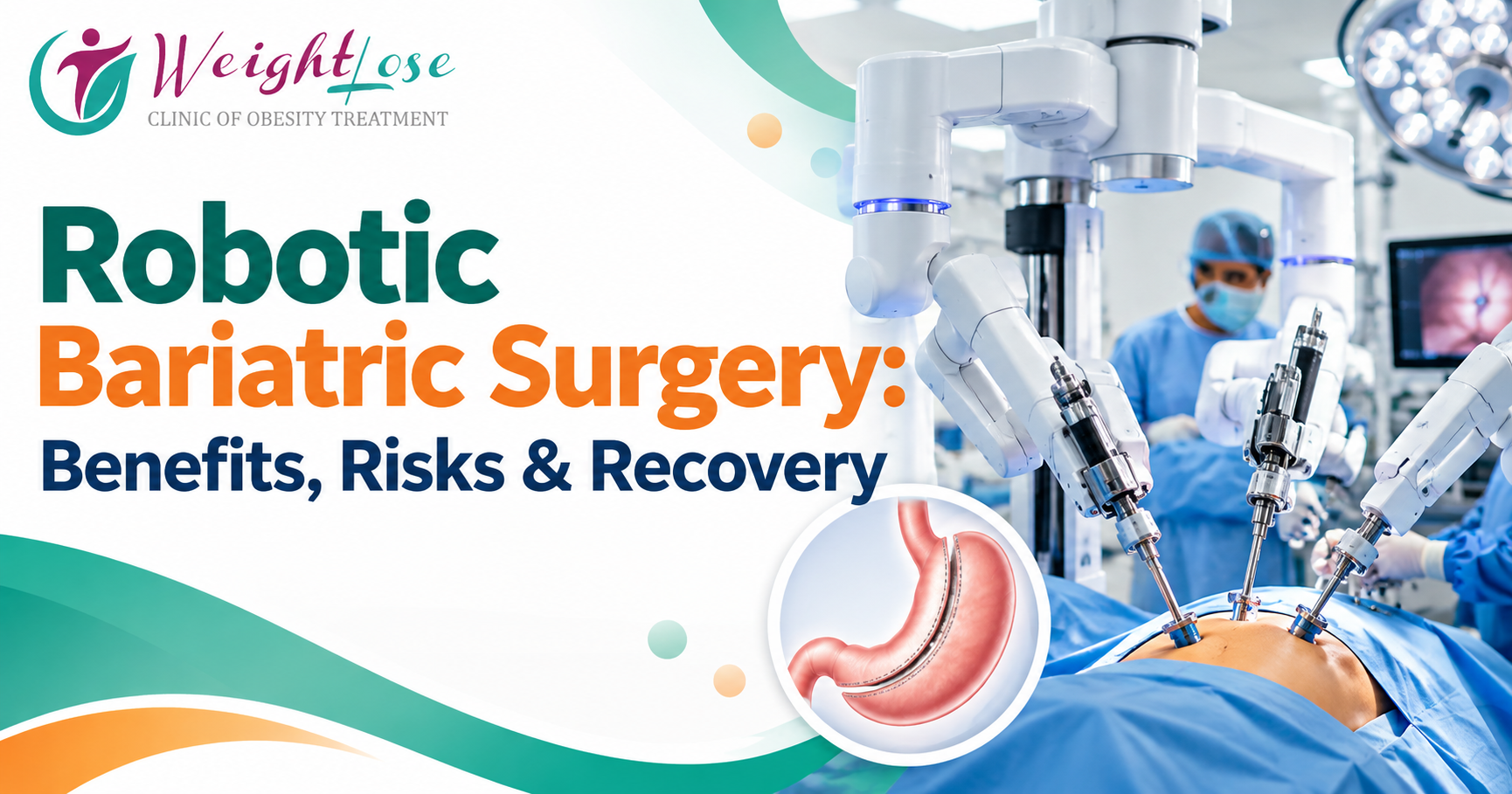
Robotic Bariatric Surgery: Benefits, Risks & Recovery
Weight loss surgery has changed dramatically over the years. The goal is still the same—help people achieve meaningful, lasting weight loss—but the way surgeons perform these procedures has become far more refined.
That’s where robotic bariatric surgery enters the picture.
It’s precise.
It’s minimally invasive.
And no, the robot isn't operating on you by itself.
The robotic system is controlled entirely by the surgeon, allowing the surgeon to perform delicate movements with enhanced precision and visualisation during the procedure. At Weight Loss Clinic, Dr Tarun Mittal has a clinical focus that includes bariatric, laparoscopic, and robotic surgery, with extensive experience in minimally invasive procedures.
What Is Robotic Bariatric Surgery?
Robotic bariatric surgery uses a specialised robotic surgical system to assist the surgeon during weight loss procedures. Instead of making a large abdominal incision, the surgeon generally works through small incisions using specialised instruments and a camera.
The interesting part is the control.
The surgeon sits at a console and directs every movement. The robotic platform can provide a magnified, three-dimensional view of the surgical field and allow controlled instrument movements—particularly useful when operating around small or difficult-to-reach structures.
For someone considering the Best Robotic Surgery in Delhi NCR, the technology matters, but the surgeon operating it matters even more.
Benefits of Robotic Bariatric Surgery
Why consider robotic assistance at all?
One reason is precision. The technology can help the surgeon perform highly controlled movements during complex surgical steps.
Another is visualisation. A magnified three-dimensional view can make anatomical structures easier to identify, while specialised instruments can offer a greater range of movement than conventional straight laparoscopic instruments.
Patients may also benefit from the minimally invasive nature of the approach, which can mean smaller incisions, less tissue disruption and a potentially smoother recovery compared with traditional open surgery.
But here's the thing: robotic surgery doesn't automatically mean zero pain, zero complications or instant weight loss. Surgery is still surgery.
Are There Any Risks?
Yes.
Robotic bariatric surgery carries risks just as other surgical procedures do. These can include bleeding, infection, blood clots, reactions to anaesthesia, leaks, nutritional deficiencies and other procedure-specific complications.
The actual risk depends on several factors, including the type of bariatric surgery, your existing medical conditions, BMI, previous abdominal surgeries and overall health.
That is why choosing a qualified bariatric surgeon and undergoing proper pre-operative assessment is so important.
What Is Recovery Like?
Recovery isn't a race.
After surgery, patients gradually move from liquids to soft foods and eventually to a carefully planned regular diet, according to their surgical team's instructions. Physical activity is increased progressively, while follow-up appointments help monitor healing, nutrition, and weight-loss progress.
The first few days may feel uncomfortable. That's normal. Your body has just been through an operation.
Long-term success, however, depends on what happens after those first few days. Weight loss surgery is a tool—not a substitute for healthy eating, physical activity, and lasting behavioural changes. Weight Lose Clinic itself emphasises the importance of permanent lifestyle adjustments and behavioural support following bariatric surgery.
Is Robotic Bariatric Surgery Right for You?
Not necessarily.
And that's an important answer.
The right procedure depends on your medical history, BMI, obesity-related conditions, previous treatment attempts, and individual goals. A consultation with Dr Tarun Mittal can help determine whether bariatric surgery—and, if appropriate, a robotic approach—is suitable for you.
Technology can assist the surgeon.
Experience makes the difference.
For patients exploring the Best Robotic Surgery in Delhi NCR, the smarter first step isn't choosing a machine. It's choosing the right surgical team, understanding the procedure, and knowing exactly what recovery will demand. That conversation should come before the operation.