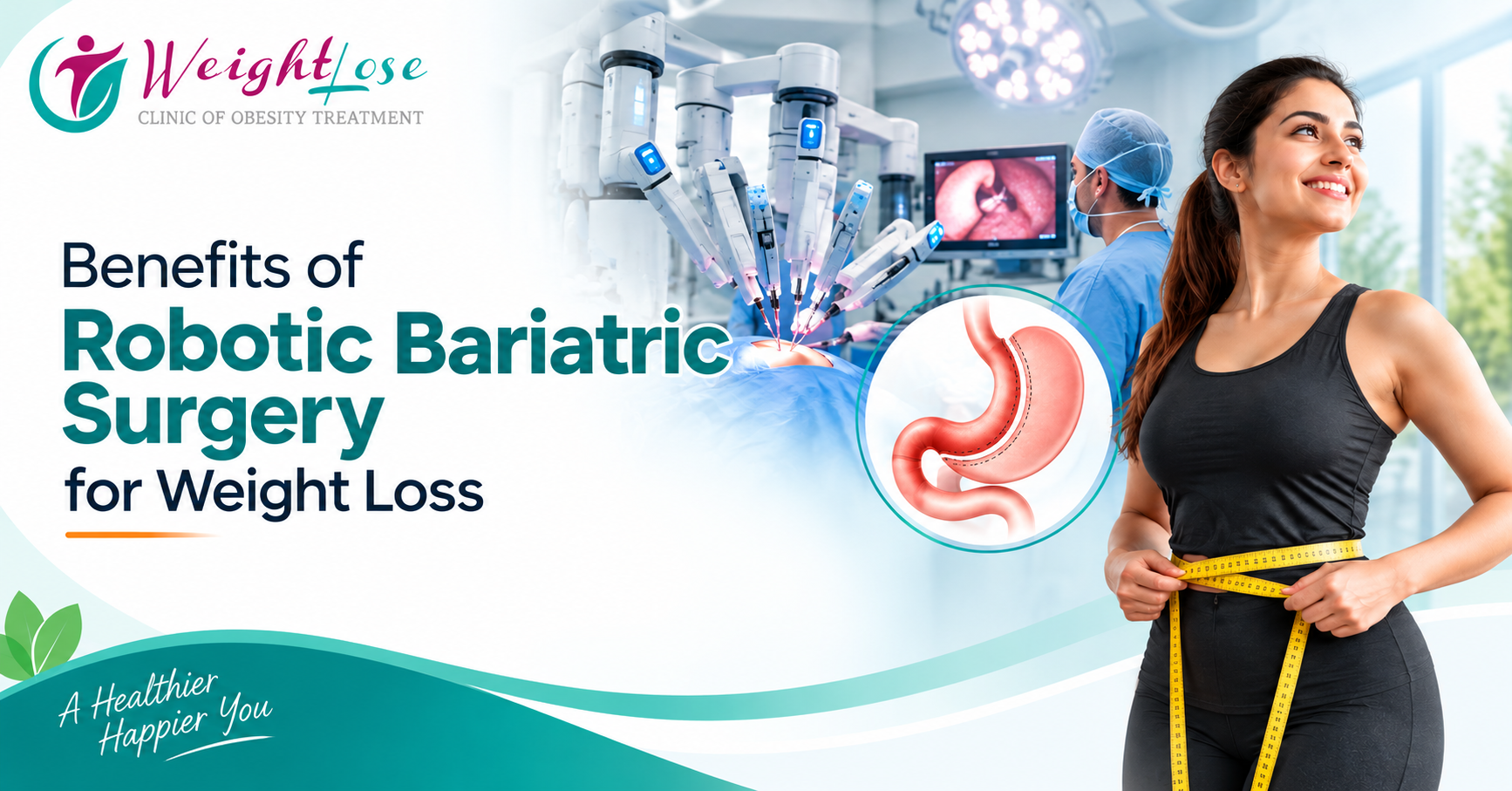
Benefits of Robotic Bariatric Surgery for Weight Loss
Losing weight sounds simple on paper.
Eat less. Move more. Stay consistent.
But obesity doesn't always play by those rules. For some people, years of dieting, exercise plans, and lifestyle changes still don't bring lasting results—especially when obesity is accompanied by conditions such as type 2 diabetes, high blood pressure, or sleep apnoea. That's where bariatric surgery comes in, and as surgical technology advances, robotic bariatric surgery has become an option worth understanding.
Not a shortcut.
A surgical treatment.
What Is Robotic Bariatric Surgery?
Robotic bariatric surgery uses a robotic surgical system controlled by a trained surgeon to perform complex movements through small incisions. The robot doesn't independently decide what to do—the surgeon remains in control throughout the procedure, using enhanced visualisation and specialised instruments to carry out the operation.
Depending on the patient's condition and treatment plan, robotic assistance may be used for procedures such as sleeve gastrectomy or gastric bypass.
And here's the interesting part: the technology is less about replacing the surgeon and more about giving the surgeon greater control during delicate steps of an operation.
Precision matters.
Potential Benefits of Robotic Bariatric Surgery
1. Smaller Incisions
Robotic bariatric procedures are generally performed through small keyhole incisions. Compared with traditional open surgery, minimally invasive techniques can mean less tissue disruption and smaller scars.
For someone already dealing with the physical challenges of obesity, avoiding a large abdominal incision can make the recovery process considerably more manageable.
2. Enhanced Surgical Visualisation
Robotic systems can provide a magnified, high-definition, three-dimensional view of the surgical field. That additional visual detail can help the surgeon identify and work around anatomical structures during the procedure.
It's a little like moving from looking through a window to working with a sharply focused camera.
3. Greater Instrument Control
The robotic instruments are designed to provide precise movements and flexibility within the confined surgical area. This can be particularly useful when the surgeon needs to perform controlled movements around delicate tissues.
The machine assists.
The surgeon operates.
4. Potentially Easier Recovery
Because robotic bariatric surgery is minimally invasive, patients may experience less postoperative discomfort and a quicker return to normal activities compared with open surgery. Recovery, however, varies from person to person and depends on the procedure, overall health and postoperative care.
5. Supports Long-Term Weight Management
The real goal isn't simply watching the weighing scale drop.
Bariatric surgery can help eligible patients achieve significant weight loss and may also improve obesity-related health problems. But surgery is only one piece of the puzzle. Nutrition, physical activity, follow-up appointments and long-term behavioural changes still matter enormously.
Choosing the Right Surgical Team
Technology alone doesn't make a procedure successful. Experience, patient selection, surgical planning and postoperative follow-up matter just as much.
If you're considering robotic bariatric surgery, discuss your BMI, medical history, previous weight-loss attempts and existing health conditions with a qualified bariatric surgeon rather than deciding based on the technology alone.
Dr Tarun Mittal provides specialised obesity and bariatric care through the Weight Loss Clinic, with treatment plans tailored to individual patient needs. Patients searching for Best Robotic Surgery in Delhi NCR should look beyond the word "robotic" and ask the more important questions: Who is performing the surgery? Why is this procedure suitable for me? What happens after the operation?
Those answers matter.
Because successful weight loss isn't just about surgery day. It's about what happens in the months and years that follow.