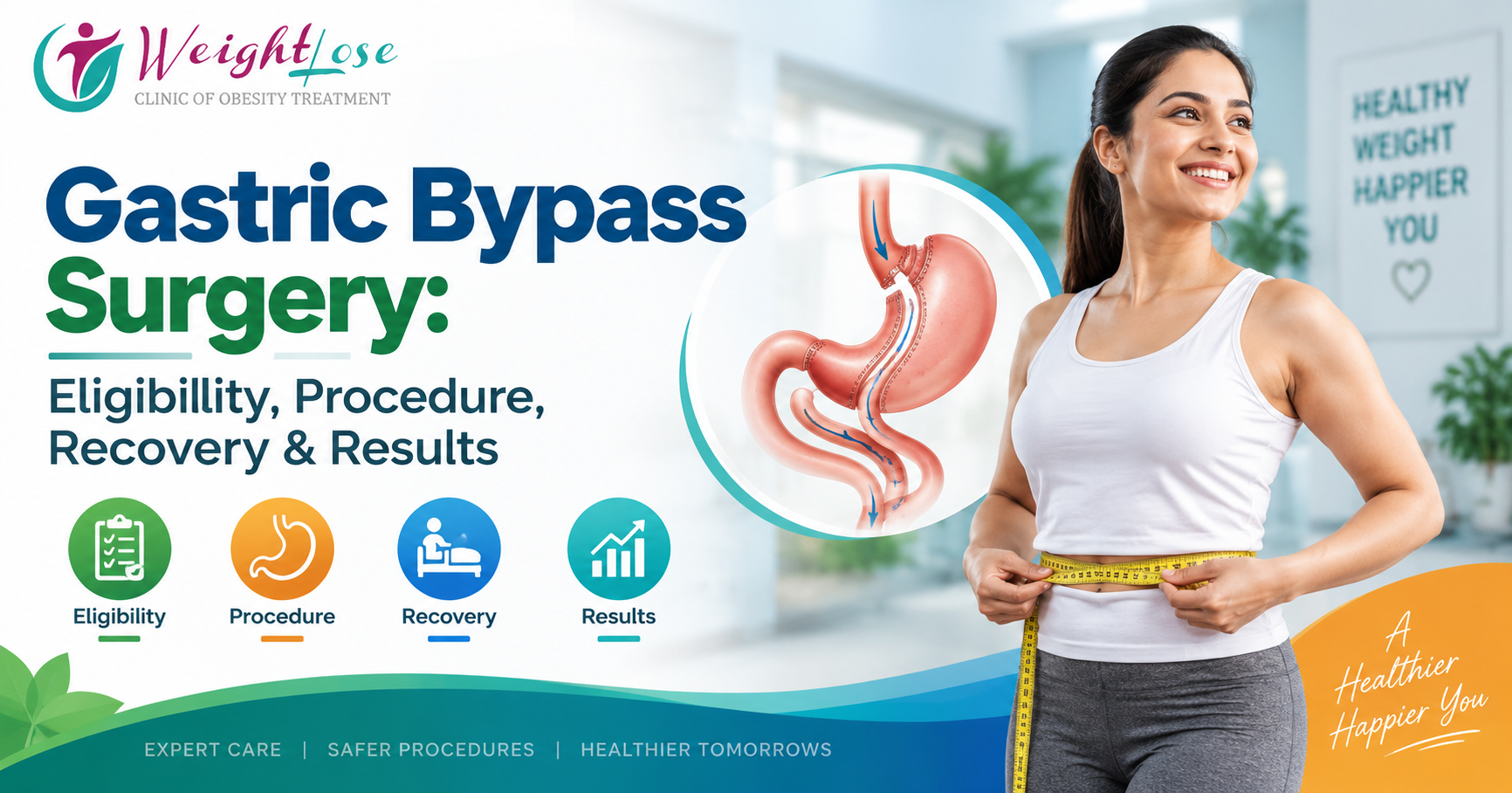
Gastric Bypass Surgery: Eligibility, Procedure, Recovery & Results
Losing weight isn't always as simple as eating less and exercising more.
Sometimes, the scale refuses to cooperate. Sometimes, obesity starts bringing diabetes, high blood pressure, sleep problems, or aching joints along for the ride. And sometimes, after years of trying diets, workouts, medicines, and every new promise that appears on a phone screen at midnight, you need a different medical approach.
That's where gastric bypass surgery enters the conversation.
At the Weight Loss Clinic, Dr Tarun Mittal approaches bariatric surgery as a serious medical decision—not a shortcut or a cosmetic fix. The aim is substantial, sustainable weight loss alongside better overall health, with appropriate evaluation before surgery and continued support afterwards.
Who Is Eligible for Gastric Bypass Surgery?
Not everyone struggling with extra weight needs surgery. In fact, that's precisely why eligibility matters.
Generally, bariatric surgery may be considered for people with a BMI of 40 or above, or those with a BMI of 35 or above alongside significant obesity-related conditions, such as type 2 diabetes, heart disease, or sleep apnea.
But BMI isn't the entire story.
A surgeon also considers your medical history, previous attempts at weight loss, existing conditions, eating patterns, medications, and whether you're prepared for the long-term lifestyle changes that follow surgery. Because the operation may change your digestive system dramatically, walking into it without understanding what comes afterward. Not a great idea.
What Happens During Gastric Bypass Surgery?
The commonly performed Roux-en-Y gastric bypass works in two important ways.
First, the surgeon creates a much smaller stomach pouch, so you feel satisfied with considerably less food. Then, the digestive pathway is rearranged so food bypasses part of the small intestine, changing calorie absorption and producing metabolic effects as well.
It isn't simply about making the stomach smaller.
The procedure can influence hunger, satiety, blood sugar regulation, and the way your body handles nutrients. At Dr Tarun Mittal's practice, bariatric surgery options include minimally invasive approaches, with treatment selected according to the patient's individual condition and surgical requirements.
What Is Recovery Like?
The operation is only one chapter.
After gastric bypass, your body needs time to adjust, and your diet progresses gradually rather than jumping straight back to a normal plate of food. Early meals are typically introduced in stages under medical and nutritional guidance, while hydration, protein intake, supplements, physical activity, and follow-up become part of the new routine.
Most patients can return to regular activities within a few weeks, although recovery varies from person to person.
Then comes the less glamorous part.
Consistency.
Walking regularly. Following dietary instructions. Taking prescribed supplements. Attending follow-up appointments. Learning to recognise when you're genuinely hungry rather than simply reaching for food because it's 5 p.m. and your brain has decided biscuits are dinner.
The clinic's patient education resources also emphasise gradual exercise, long-term lifestyle changes, and close follow-up after bariatric surgery.
What Results Can You Expect?
Results aren't identical.
The clinic notes that patients may typically lose around 50–80% of their excess weight within 12–24 months, although individual outcomes depend on the procedure, health status, and commitment to lifestyle changes.
And weight loss is only one measure of success.
For some patients, the bigger victory is climbing stairs without stopping. For another, it's better diabetes control. Someone else may simply want to play with their children without feeling exhausted after ten minutes.
That is why choosing the Best Gastric Bypass Surgery in Delhi shouldn't mean chasing the biggest promise. Look at the surgeon, the evaluation process, surgical expertise, follow-up support, and the quality of patient education.
Dr Tarun Mittal, a Senior Consultant Laparoscopic Surgeon at Sir Ganga Ram Hospital, has specialised training in laparoscopic and bariatric surgery and provides bariatric, laparoscopic, and robotic surgical care through his Weight Loss Clinic.
Gastric bypass can be powerful.
But the real transformation doesn't happen on the operating table alone. It happens afterwards—in ordinary breakfasts, evening walks, follow-up appointments, smaller portions, better habits, and the gradual realisation that your body can move differently than it did before.
That's the journey.
And it deserves proper medical guidance from the first consultation onward.