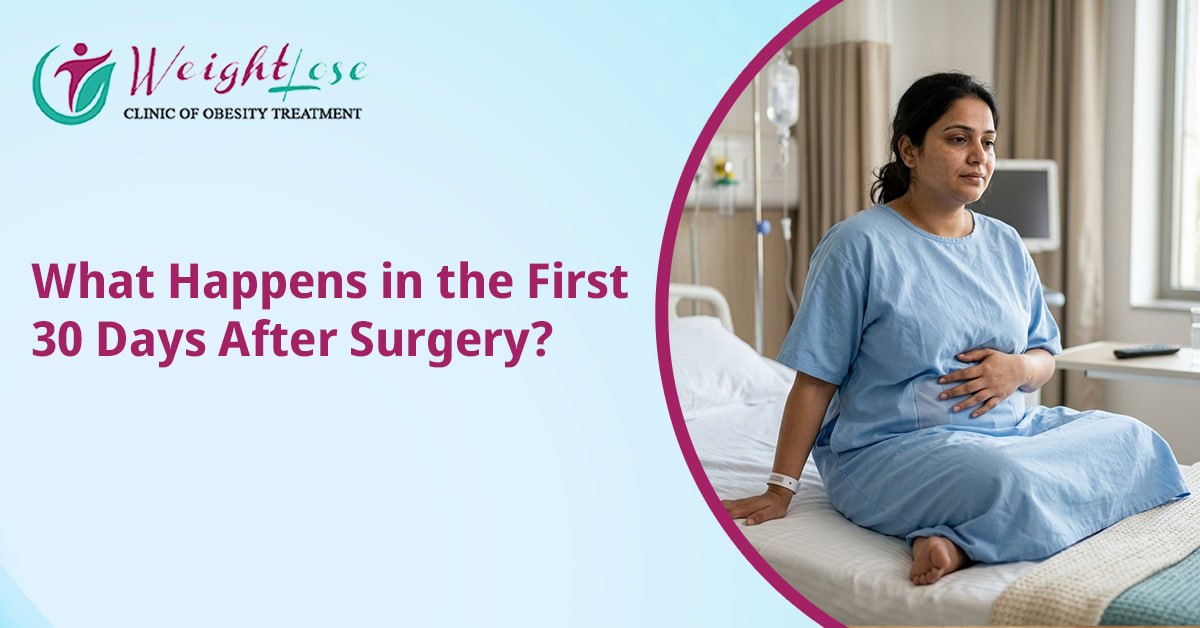
What Happens in the First 30 Days After Surgery?
Opting for a weight loss surgery is itself a huge decision; however, many people quickly realise that the true challenge comes after the surgery. The initial 30 days post-surgery are extremely important, as they constitute the time during which your body recovers, adjusts, and gets used to an entirely different way of living. Knowing exactly what will happen during this time period will help you prepare better and lessen any worries you may have.
Here at Weightlose Clinic, one of the leading clinics providing weight loss surgery in Delhi, our surgeons know exactly how to guide you through this stage.
Week 1: Healing and Rest
Initially, recovery is the top priority for the first few days post-surgery. Patients often suffer from pain, tiredness, and immobility, which is very natural at this time. Physicians recommend moving about in little bits during the first 24 hours to promote good blood circulation.
During this period, clear fluids like water, soup, and electrolyte solutions are part of the diet. As the digestive system heals, it becomes necessary to sip slowly. Patients find themselves losing their energy, which is only due to the reduction in calorie consumption.
It is also quite normal for some to be anxious, while others may get excited.
Week 2: Adjusting to a New Eating Pattern
By the second week, patients slowly move from clear liquids to thicker liquids or pureed foods. This stage teaches an important habit: eating slowly and listening to fullness signals.
Common challenges include:
- Learning portion control
- Avoiding dehydration
- Managing mild nausea if eating too quickly
Specialists at Weightlose Clinic emphasise mindful eating during this phase because early habits shape long-term results. Patients begin noticing small weight changes, which often boosts motivation.
Week 3: Regaining Energy and Confidence
Around the third week, energy levels start improving. Light daily activities become easier, and many patients feel encouraged as clothes begin fitting differently.
Soft foods are gradually introduced depending on recovery progress. Protein intake becomes a priority because it supports healing and muscle strength. Patients are usually advised to avoid sugary or fried foods, as the digestive system is still adapting.
Some individuals experience emotional ups and downs during this stage. Rapid lifestyle changes can feel overwhelming, but regular follow-ups help address concerns early.
Week 4: Building a Sustainable Routine
By the end of the first month, most patients begin developing a structured routine. Eating schedules, hydration habits, and gentle exercise become part of daily life.
Typical improvements include:
- Noticeable weight loss
- Better mobility
- Reduced hunger levels
- Improved sleep quality
However, this phase also reminds patients that surgery is a tool, not a shortcut. Long-term success depends on consistent habits and medical guidance.
Experts at Weightlose Clinic focus on educating patients about nutrition, physical activity, and emotional wellbeing so they feel supported beyond the operating room.
Common Concerns Patients Have
Many patients worry about whether their progress is “normal.” In reality, recovery looks slightly different for everyone. Some lose weight faster, while others adjust gradually. The key signs of healthy recovery are steady improvement, proper hydration, and following medical advice.
Regular follow-ups help detect nutritional gaps early and ensure safe progress.
Conclusion
The first 30 days after weight loss surgery are a period of transformation, learning, and adjustment. While the body heals physically, the mind also adapts to healthier habits and a new relationship with food. Challenges during this phase are temporary, but the positive changes can last a lifetime.
With proper care, patience, and expert support from Weightlose Clinic, which is also known as the best Weight Loss Surgery in Delhi, patients can move through recovery smoothly and build the foundation for lasting weight loss and improved overall health.